Personal Brand as a Living Brand Strategy Case Study
In May this year, roughly 4 months ago, I converted my personal Pinterest Account into a Business Account with the intention of treating my own digital presence as a live content strategy experiment. Instead of posting passively, I began using Pinterest as a testing space for visual consistency, content themes, search behavior, and distribution that can shape discovery and engagements.
As a search platform, Pinterest serves as a guide to identify relationships between content themes, audience psychology, platform behavior, trend forecasting and brand positioning.
I used Pinterest as both a creative platform and a feedback loop, tracking which images, ideas, and narratives resonated most, then using those signals to refine my content across Pinterest, Substack, and my broader personal experimentation.
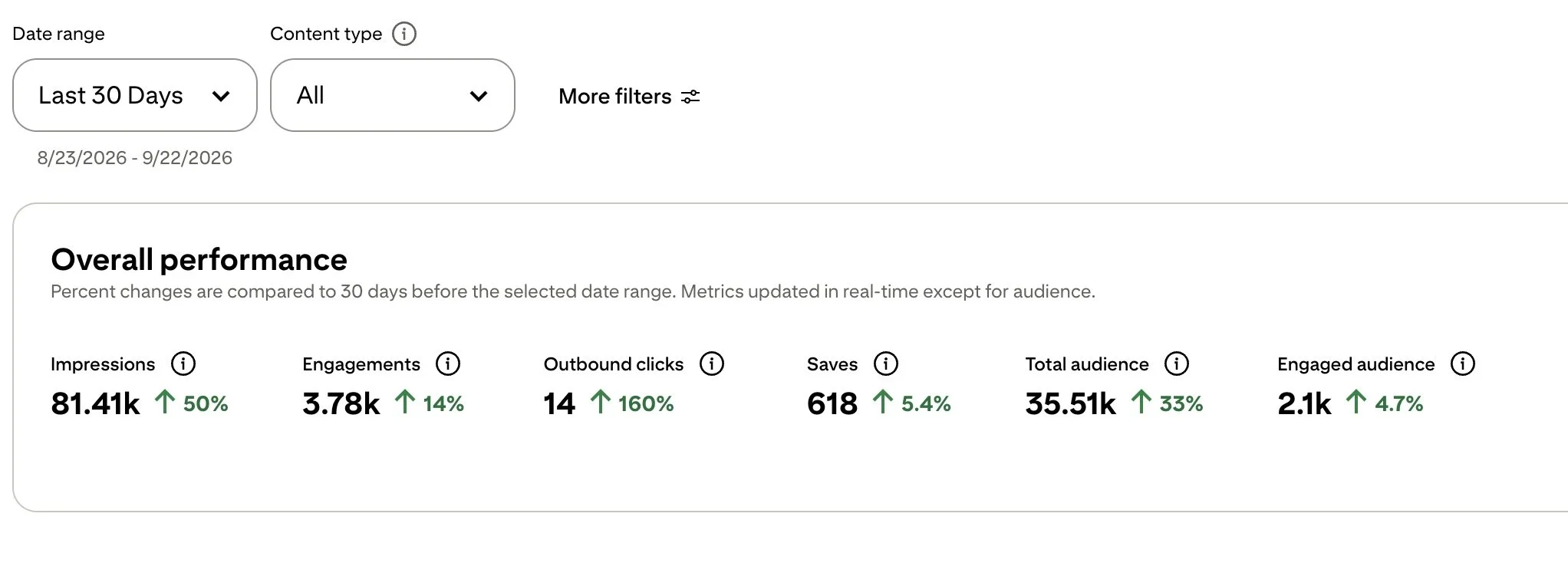
In the past 30 days, I have grown my account to 81.41k monthly impressions and 3.78k total engagements within my content. My content has reached an audience of 33.51k, and within this audience, 2.1k are engaged. This has resulted in 618 saves, people re-pinning my content, but only 14 outbound clicks. This is my weakest metric, but less identified, as I only began back-linking my content with a CTA in the description this past month, as a form of omni-channel strategy, connecting my imagery to stories created on my Substack. Since making this change I have increased my outbound click rate by 160%. All of this growth is attributed to organic traffic, only utilizing my own original content.
This omni-channel strategy is a coming evolution to determine if posting on Pinterest will lead to more visibility and converted subcribers on my Substack. With long-term, revenue potential of paid subscribers. More data on this to follow.
The intent behind the omni-channel strategy follows: the visual attract attention, the observations create attachment, the writing wins loyalty.
The photography is the top of the funnel, and the writing is “the product.”
The intended funnel follows: beautiful image → identifiable idea/topic → curiosity → CTA → Substack.
Pinterest serves as a distribution engine for my ideas, with different Pin types doing different jobs. My set-up design is to turn one Substack essay into multiple Pinterest entry points.This is framework’s core foundation positions it’s strength in sustainable growth, that’s compoundable. That’s also the premise of Pinterest, it takes time for pins to find significant growth, but each re-pin is an opportunity for more reach indefinitely. The content doesn’t die after 24-hours, it breathes and expands.
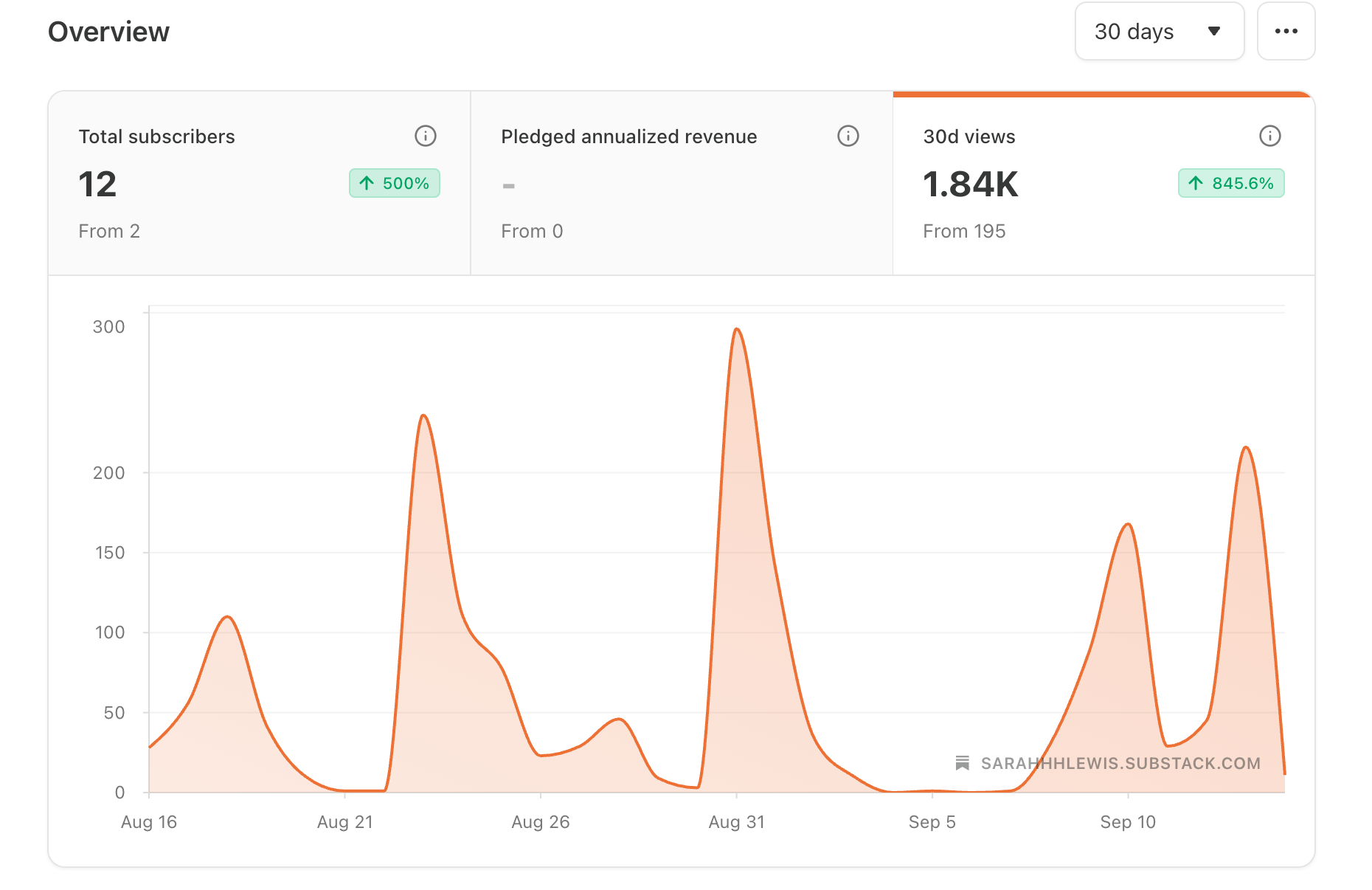
August Substack growth, resulting in 10 new subscribers.
This trajectory became recognized from my pin showcasing Blair Bernstein’s sidewalk art gallery, featuring New York and Parisian themes centered on femininity and fashion. The pin has received steady traction over the past 90 days, but what is particularly interesting is the timing of engagement. During roughly the first month and a half, the pin accumulated 9 saves, representing only 22% of its current total. Over the following 45 days, it gained an additional 32 saves, bringing the total to 41. Nearly 78% of the pin’s saves occurred during the latter half of its lifetime.
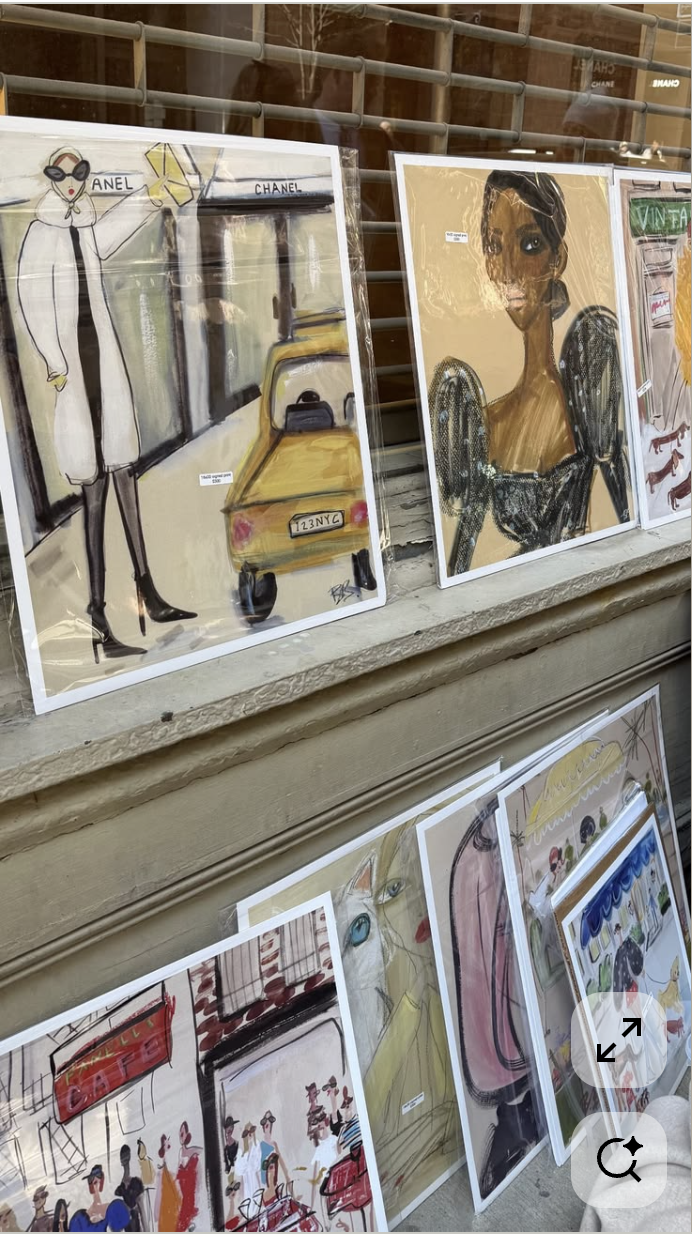
Pinterest Pin photo of Blair Bernstein’s Sidewalk Gallery in Soho, NYC.
At this stage, not all imagery reflects the exact brand identity. However, consistency and experimentation are critical to understanding audience behavior and sustaining organic growth. By testing a variety of visual content, I can identify what drives impressions, engagement, and audience expansion while continuously refining the broader creative direction.
Visibility is an important metric of brand awareness, but long-term success requires more than reach. Longevity stems from a deep understanding of the audience and an evolving alignment between content performance and brand identity. As the account matures, certain content may eventually be archived to create space for a more cohesive visual identity, supported by an established audience and stronger performance insights.
The objective is to balance expansion with refinement, allowing audience growth and brand identity to evolve together.
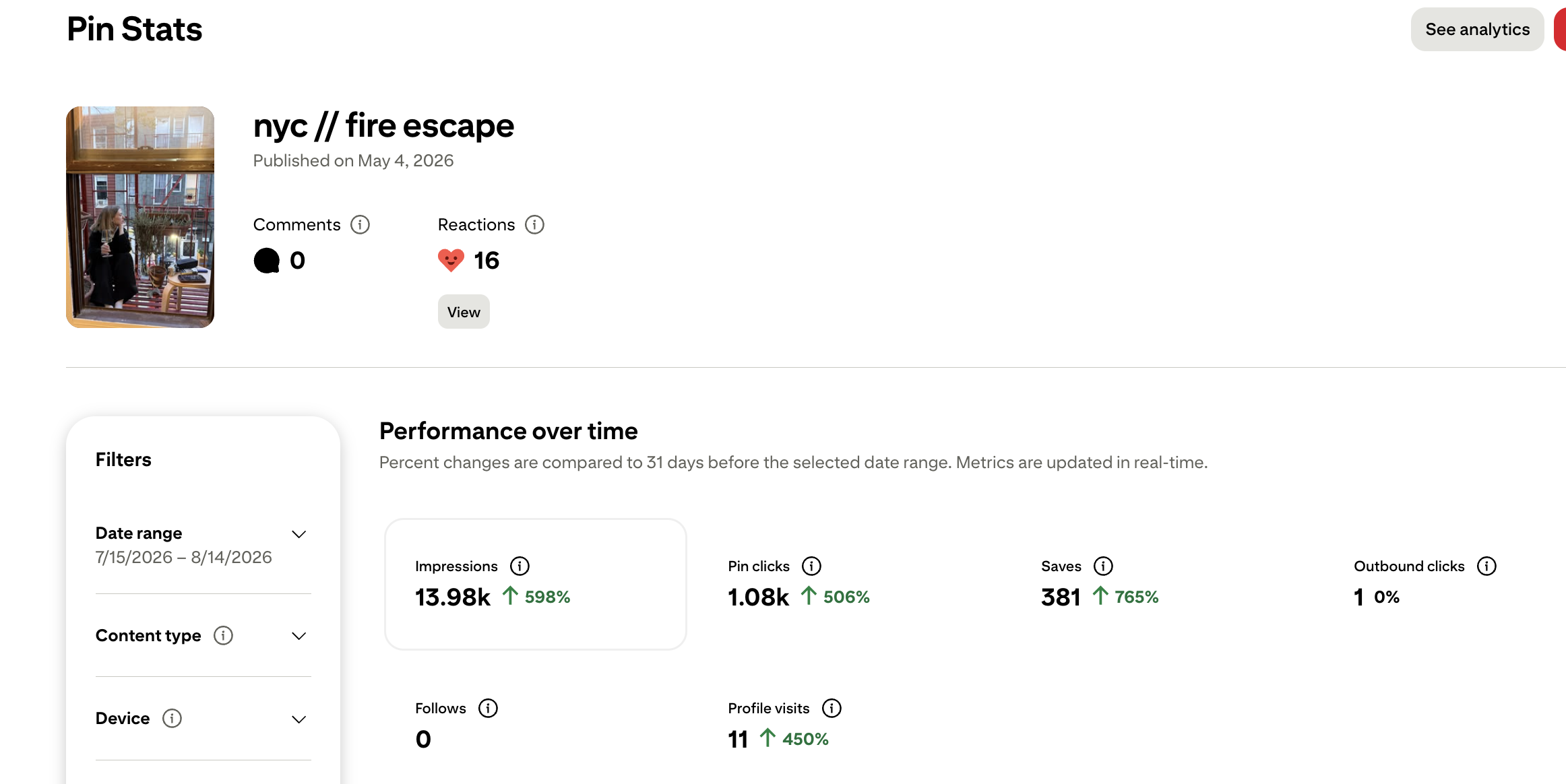
For example, my most successful pin is a photo of my friend drinking wine on a NYC fire escape. The all-time performance sits at 13.98k impressions, 1.08k pin clicks, 381 saves, 11 profile visits, and 1 outbound click (no CTA on this pin).
Analyzing my highest performing pins, the characteristics that produced the repeatable engagement, include a recognizable place, embedded with a fashion object or person. People aren’t responding to content that embodies only one of these characteristics, but a combination of two or more.
My audience is saving content with multi-layered context, not just a scenic street photo of Madrid, but a street photo showcasing a summer outfit in motion, context surrounding the object. This method found repeated success through recognizable place, embedded with a fashion object or person, also within my Portugal pin.
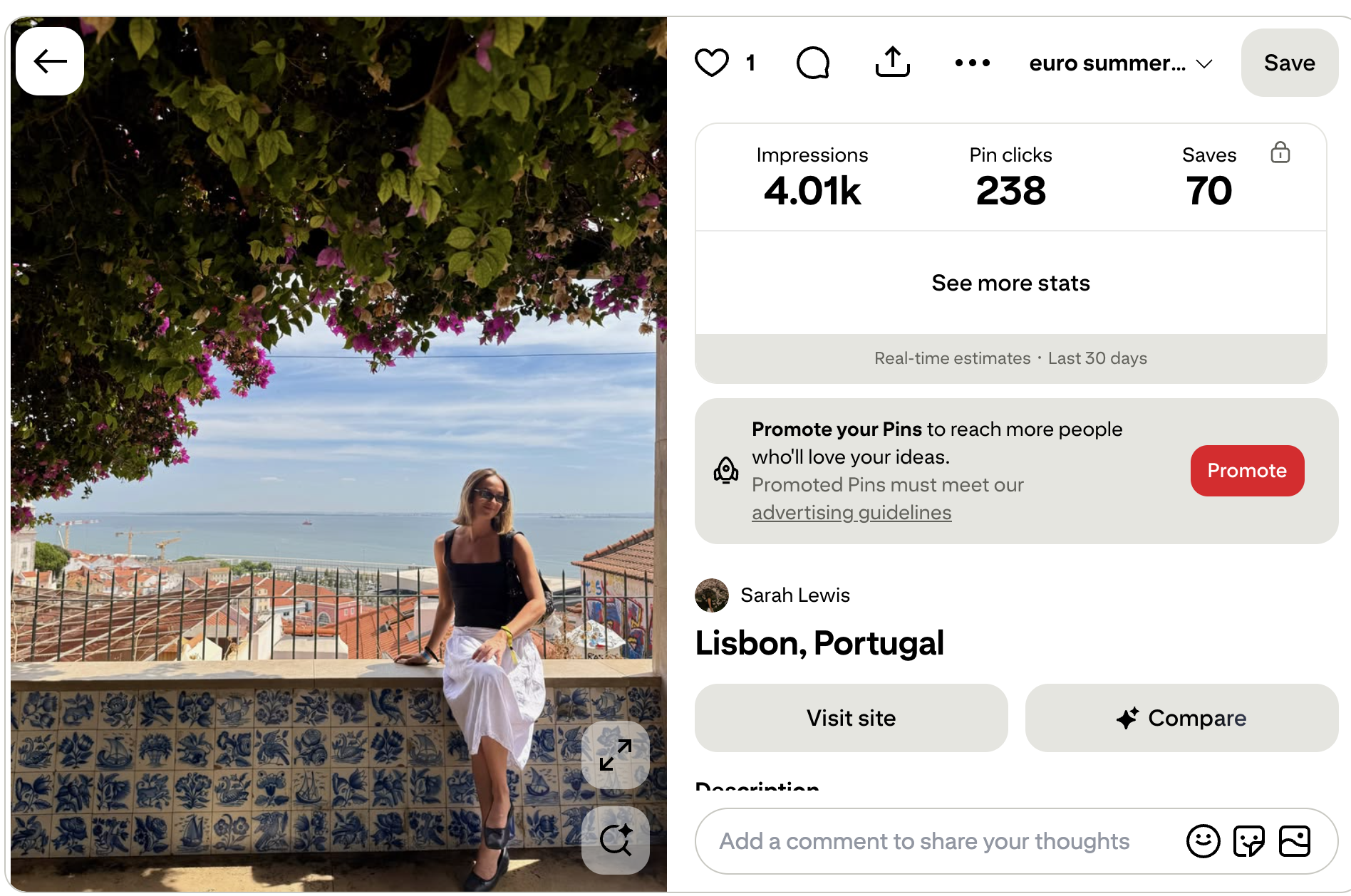
The overall trend found within my highest performing pins leans towards placed based + atmospheric, if the audience can recognize the place, situate themselves within the atmosphere and this atmosphere reflects a pre-existing desire, the pin receives engagement.
In addition, style of content is significant for engagement, for example, Pinterest favors content that isn’t as directive as some high-performing Instagram posts, meaning photos where the subject matter is looking away, faceless, undefined. In none of my top performing pins, is the person the focal point of the image. Pinterest is not the place to publicize yourself independently, it is to create a mood, atmosphere, allure. Audiences connect more deeply with content that captures identity and aspiration, this is because the typical Pinterest user is on Pinterest to create a mood board, to create a space or life to get lost in, a focus on the feeling the content presents.
Content that emphasizes identity projection over identity participation seems to perform better. A pinterest user isn’t necessarily trying to follow you specifically, rather they are trying to collect fragments to help construct their imagined identity. This is where I see engagement specifically, fashion focused and new york content, shine through. This is apparent from the boards my pins are being repinned to titled, “Fall Fashion”, “NYC Fashion”, “NYC”, “NYC Apartment”. This type of content is appealing to independent board creation around the these motifs, meaning, Fashion and NYC content, are common themes my engaged audience is pinning and re-pinning.
New York currently represents my largest audience segment at 15.9%. By developing more NYC-centered content, I can target an established audience while testing whether the city's global recognition drives engagement beyond this demographic.
To test this theory further, I am working with an emerging clothing brand Kinne on producing lived-in content for their first product launch. The framework will resemble the core formula, recognizable place, embedded with fashion object and/or person. The content concept will be centered in New York living, and will incorporate traditional New York signifiers, such as fire escapes. Incorporating already known pillars of engagement success. Results and concept strategy will be reported once executed.
High visual engagement does not automatically translate to conversion. My audience may value the content as inspiration within Pinterest without yet perceiving enough incentive to leave the platform. This is where my strategy with Substack and work with the brand Kinne become my next phase of evolution. Experimentation in changes of CTA, pin titles, text overlay, description, and/or creative format while keeping the underlying aesthetic constant. Then measure whether outbound CTR changes. Analyze, recognize, refine, and repeat.
Content strategy overall requires a holistic approach, understanding how to format the content in relation to the platform it will reside on. Pinterest does provide more flexibility in content formatting, and as experimentation, I have included some short form videos, and while they drive impressions, they are not the media type that is getting re-pinned. In my own testing, the typical Pinterest user is opening Pinterest for imagery not videography.
A brand identity doesn’t exist in a vacuum; it exists within an ecosystem. As I built my an online presence on Pinterest, I began to revise the others. And the most compelling result I noticed wasn’t the engagement found through Pinterest, but the common theme recurring across them all.
On Instagram, which I also recently converted to a public account, I analyzed my six most recent posts published between December 2025 and August 2026. A pattern emerged between total views and unique viewers: users were not simply encountering the content once, also returning to it. My highest-viewed post generated 7,866 views from 1,789 unique viewers, equating to approximately 4.4 views per viewer. The same post generated 483 likes, 50 comments, 11 saves, 165 profile visits, and 9 follows, demonstrating that repeated exposure could also translate into deeper profile exploration and audience conversion.
The data also revealed differences between content types. Visually driven lifestyle and fashion posts featuring me more prominently produced the strongest profile-visit and follower conversion, while atmospheric imagery such as landscapes and travel photography generated engagement without the same level of profile exploration. This suggested that more aesthetic content helps establish the visual point of view, while more personal imagery created stronger curiosity around the person behind it.
TikTok reveals a different, but complementary behavior. Across a sample of ten posts, I generated 12,805 total organic views and 1,009 visible engagements, producing an approximate 7.9% engagement rate based on likes, comments, and saves alone. Rather than purely aesthetic content driving performance, the strongest engagement often came from posts built around a clear observation, joke, cultural moment, or point of view. One art-gallery focused video, for example, received 933 views, 95 likes, 5 comments, and 9 saves, producing an approximately 11.7% visible engagement rate despite relatively modest distribution.
Together, the platforms revealed a broader content strategy. Instagram performed most strongly as a visual identity and personal-brand channel, while TikTok rewards personality, cultural observation, and distinct perspective. Pinterest functions as the discovery and search layer connecting those themes over a longer content lifecycle.
All platforms display high engagement relative to audience size and reach, showing efficiency and consistency across platforms. All entirely generated through organic traffic, utilizing only original created content, with $0 in paid media spend.
Now imagine what I could produce with a budget.
